
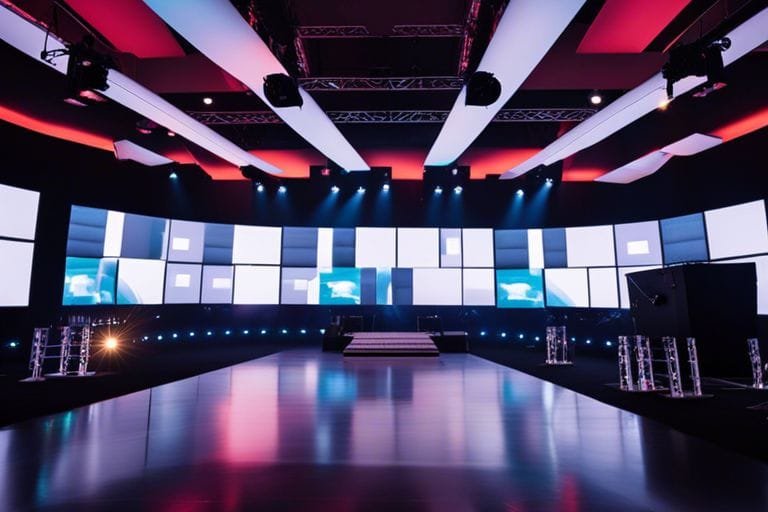
Two corporate events with the same budget, same venue, and same guest list can feel completely different depending on one thing: how well the AV is planned and run. Bad audio makes a strong speaker sound unconvincing. A dim, flat room makes a big product launch feel like a staff meeting. Here’s what the research says about why that happens, what actually goes into getting it right, and how to plan for it.
Why AV quality changes how an event is judged
Audio matters more than most planners expect. Academic research on sound and credibility found that when the same content was presented in low-quality audio versus high-quality audio, listeners rated speakers as measurably less credible, less reliable, and had worse recall of what was actually said — the audio quality itself changed how the message landed, independent of the content. In an industry survey by AVIXA, the trade association for the AV industry, attendees rated audio equipment on the main stage as an event enhancement 81% of the time, with visual elements rated highly too (77%) — both are treated by attendees as core to the experience, not background details.
There’s also a real gap between what attendees want and what gets delivered. A 2026 industry benchmarking report found that 74% of attendees said immersive experiences that let them properly engage mattered to them, but only 38% of event organisers said they were prioritising that when planning. That gap is largely an AV and production gap — it’s the technical execution that turns a generic conference room into something that actually feels considered.
The three components that make up “AV,” and what each one actually does
Audio. Clear, well-mixed sound across the entire room — not just near the speakers — is the baseline. This means matching the sound system to the room’s size and acoustics, proper microphone choice and placement for the format (panel vs. keynote vs. Q&A), and enough technical oversight during the event to catch and fix issues in real time rather than after a speaker has already lost the room.
Visual. This covers everything the audience looks at: projection, LED screens and video walls, and live camera feeds for content that needs to be seen clearly from every seat, not just the front rows. For events being recorded or live-streamed, this also covers the video side directly — live streaming to platforms like YouTube Live, Facebook Live, or Vimeo, plus professional recording, editing, and highlight video production for use after the event.
Lighting. Lighting does more than illuminate a room — it directs attention, sets tone, and is often what makes the difference between a space that photographs and feels like “an event” versus one that looks like a repurposed meeting room with better catering.
Where AV planning actually starts
The mistake we see most often is AV being treated as a checklist item confirmed a week or two before the event, instead of being part of the planning from the start. Getting it right in practice looks like:
- A venue survey before anything is booked. Acoustics, power access, rigging points, and sightlines vary hugely between venues, and they determine what equipment will actually work well in that specific room — not just what’s on a standard equipment list.
- A brief that covers the format, not just the room. A panel discussion, a keynote, a product launch with video content, and an awards dinner all need different microphone setups, screen configurations, and lighting cues. The plan should be built around what’s actually happening on stage, not a generic template.
- Coordination between AV, venue, and the rest of the event team — catering timings, staging, and AV setup all interact, and clashes (e.g. no time slot for a soundcheck before doors open) are avoidable if they’re planned together rather than in separate silos.
- A technician on-site during the event, not just for setup. Most AV problems that affect an audience happen live — a mic cutting out, a slide deck not displaying correctly — and the value of having someone there is catching and fixing it in seconds rather than minutes.
Hybrid and streamed events add another layer
If any part of the audience is joining remotely, the AV plan needs to account for two audiences at once: the room, and the camera. A wide shot that reads well in a ballroom often doesn’t communicate anything useful to someone watching on a laptop, and a remote presenter needs their own clean audio and return feed, separate from what the in-room PA system is doing. This is a genuinely different technical setup from an in-person-only event, not an add-on to the same plan.
Planning your next event’s AV?
We design and install audio, video, and lighting setups matched to the specific venue and format — starting with a walkthrough of the space, not a generic package — and provide on-site technical support during the event itself, plus live streaming and video production if part of your audience is joining remotely. Get in touch to talk through what your event needs.
Sources: AVIXA industry research on AV as an event enhancement; peer-reviewed research on audio quality and speaker credibility (USC Dornsife); 2026 event industry benchmarking report on the immersive-experience gap between attendees and organisers.